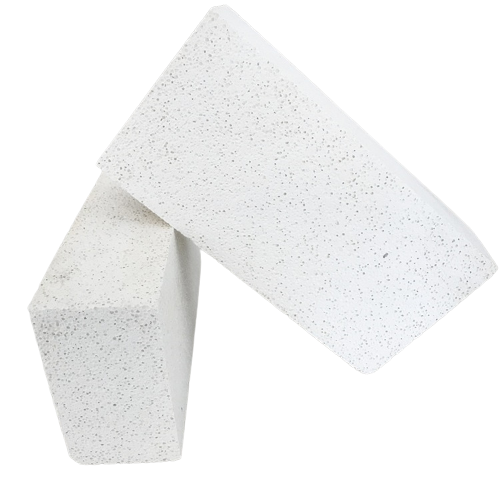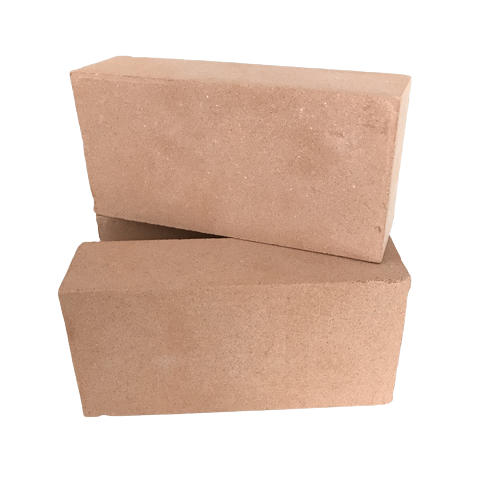






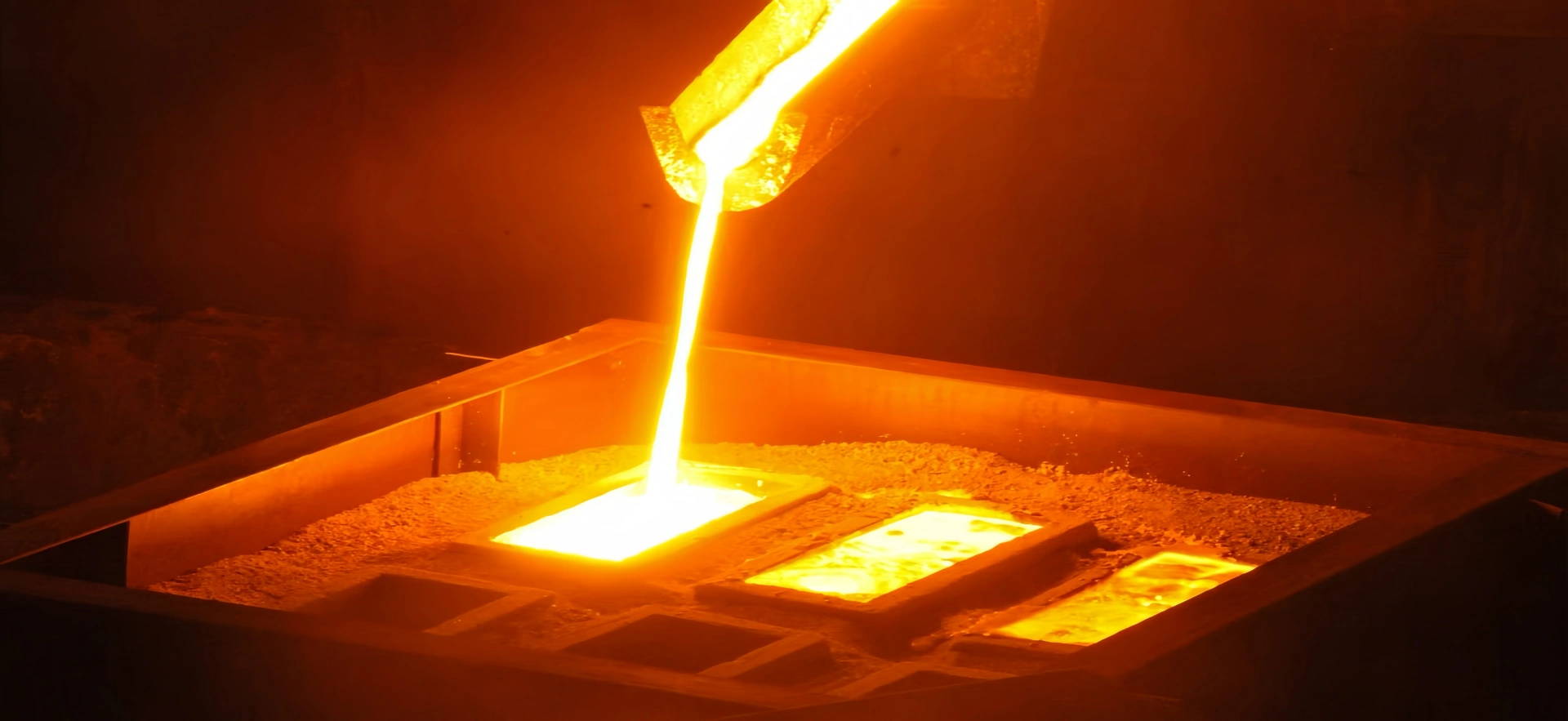
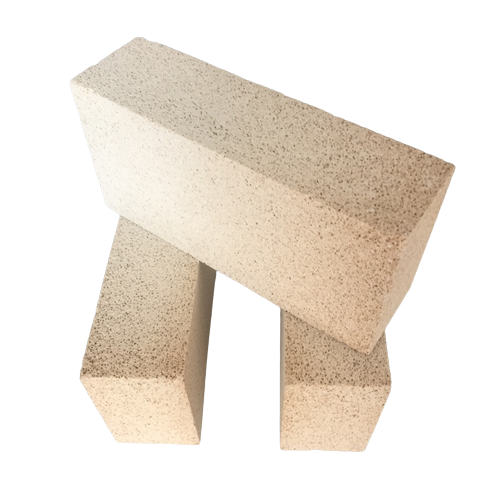
High-alumina insulating bricks are manufactured through a specialized process involving the selection of high-alumina raw materials, the incorporation of composite pore-forming agents and binders, followed by shaping and high-temperature firing. Their performance advantage lies in effectively combining high refractory properties with lightweight insulating characteristics:
- Elevated Service Temperature: With a high Al₂O₃ content (typically 48%-65%), their refractoriness and load-bearing softening temperature significantly exceed those of clay insulating bricks, making them suitable for more demanding high-temperature environments.
- Superior Thermal Insulation: A uniformly distributed closed-cell pore structure provides a low thermal conductivity, effectively blocking heat flow and reducing heat loss from furnace structures.
Good high-temperature volume stability: Thoroughly fired with minimal linear change upon re-firing, ensuring structural integrity of the insulation lining during long-term use.
Moderate mechanical strength: At equivalent densities, it offers superior compressive strength and abrasion resistance compared to clay insulating bricks, meeting mechanical requirements during installation and operation.
Key Technical Specifications:
- Al₂O₃ content: 48% - 65% (series-based)
- Bulk density: 0.8 g/cm³ - 1.5 g/cm³ (series-specific)
- Compressive strength at ambient temperature: ≥ 2.5 MPa - 10.0 MPa (increases with density)
- Thermal Conductivity (Average Temperature 350±25℃): 0.20 W/(m·K) - 0.45 W/(m·K)
- Linear Change on Re-firing: ≤ 2% (Maintained at specified temperature for 8 hours)
- Maximum Service Temperature: 1300℃ - 1550℃ (Graded)